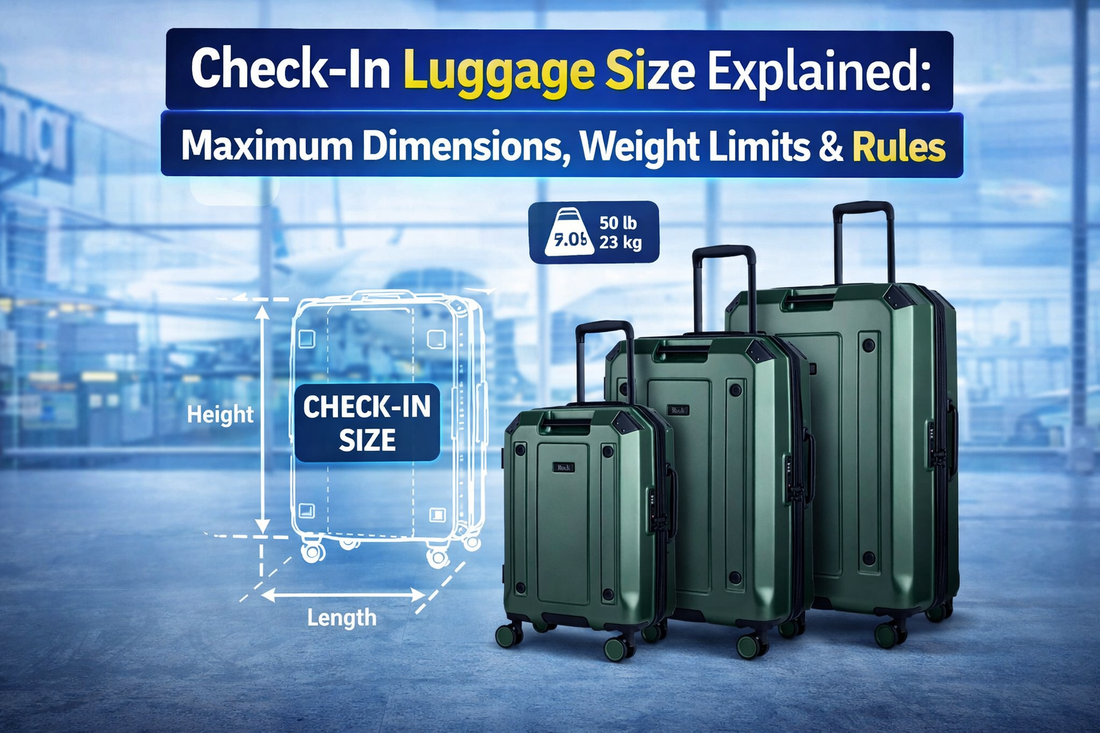
Check-In Luggage Size Explained: Maximum Dimensions, Weight Limits & Rules
When planning any flight, one of the most important things travellers need to understand is check in luggage size. Whether you’re flying domestically or internationally, airlines follow strict baggage size and weight rules. Exceeding these limits can lead to excess baggage fees, last-minute repacking at the airport, or even refusal of your bag.
This complete guide explains everything you need to know about check-in luggage size, including maximum dimensions, weight limits, airline rules, and expert packing tips to help you travel smoothly and stress-free.

What Is Check-In Luggage
Check-in luggage refers to the bags that you hand over at the airline counter before boarding. These bags are stored in the aircraft cargo hold and collected after landing at the baggage carousel.
Check-in luggage is used for:
-
Medium and large suitcases
-
Long trips and international travel
-
Carrying bulk clothing and shoes
-
Packing liquids, cosmetics, and heavy items
Unlike cabin baggage, check-in luggage is not accessible during the flight, so it’s important to pack essentials separately in your cabin bag.
Why Check-In Luggage Size Matters
Airlines operate under strict safety and cargo handling rules. The size of your luggage directly affects:
-
Aircraft weight balance
-
Cargo space management
-
Baggage handling efficiency
-
Risk of damage during loading
Following airline size limits helps avoid:
-
Oversized baggage charges
-
Delays at check-in counters
-
Forced bag repacking
-
Special handling fees
Understanding check in luggage size rules ensures a smooth airport experience from start to finish.
How Airlines Measure Check-In Luggage Size
Airlines calculate luggage size using linear dimensions.
This means:
Length + Width + Height = Total size
For example:
80 cm (length) + 50 cm (width) + 28 cm (height) = 158 cm
Wheels, handles, and side pockets are always included in the measurement.
Standard Check-In Luggage Size Across Airlines
Most airlines worldwide follow the same industry standard.
Standard Maximum Check-In Luggage Size
-
158 cm total linear dimensions (L + W + H)
Any bag exceeding 158 cm is considered oversized and may attract extra charges.
Standard Check-In Luggage Weight Limits
Weight rules depend on airline, route, and fare class.
Common Weight Allowances
-
Economy class: 23 kg
-
Premium economy: 25–30 kg
-
Business class: 32 kg
Low-cost airlines often require you to pre-book baggage weight.
Typical Check-In Suitcase Dimensions
Medium Check-In Suitcase
Height: 24–26 inches (60–66 cm)
Width: 16–18 inches (40–45 cm)
Depth: 10–12 inches (25–30 cm)
Weight capacity: Up to 23 kg
Best for:
-
5–7 day trips
-
Family vacations
-
Domestic and international travel
Large Check-In Suitcase
- Height: 28–30 inches (70–76 cm)
- Width: 18–20 inches (45–50 cm)
- Depth: 12–14 inches (30–35 cm)
- Weight capacity: 23–32 kg
Best for:
-
Long international trips
-
Winter travel
-
Students relocating abroad
-
Shopping-heavy vacations
Domestic Airline Check-In Luggage Rules
Most Indian airlines follow the 158 cm size limit.
IndiGo
Maximum size: 158 cm
Weight: Up to 23 kg
Air India
Maximum size: 158 cm
Weight: 23–32 kg depending on class
Vistara
Maximum size: 158 cm
Weight: 23–32 kg
Akasa Air
Maximum size: 158 cm
Weight: Based on fare type
International Airline Check-In Luggage Rules
Emirates
Maximum size: Up to 300 cm (special handling)
Weight: 30–50 kg depending on route
Qatar Airways
Maximum size: Up to 300 cm (special handling)
Weight: 30–50 kg
Singapore Airlines
Maximum size: 158 cm
Weight: 30–50 kg
British Airways
Maximum size: 158 cm
Weight: 23–32 kg
What Happens If Your Luggage Exceeds the Size Limit
If your check-in luggage exceeds airline size rules, you may face:
-
Oversized baggage fees
-
Special handling charges
-
Repacking at the airport
-
Refusal for extremely oversized bags
Oversized fees can be expensive and are often charged per flight segment.
Difference Between Oversized and Overweight Luggage
Oversized luggage:
Exceeds maximum size limit (usually 158 cm)
Overweight luggage:
Exceeds permitted weight (23 kg or 32 kg)
Both conditions are charged separately by airlines.
Choosing the Right Suitcase for Check-In Travel
A good check-in suitcase should be:
-
Lightweight to maximise packing capacity
-
Strong enough to handle rough baggage handling
-
Equipped with smooth wheels
-
Secure with strong zippers and lock
-
Designed within airline size limits
Ideal Features
-
Polycarbonate or polypropylene shell
-
Reinforced corners
-
TSA-approved lock
-
Expandable design
-
360-degree spinner wheels
Hard Shell vs Soft Shell Check-In Luggage
Hard Shell Suitcases
-
Better impact protection
-
Water-resistant
-
Maintains shape
-
Ideal for international flights
Soft Shell Suitcases
-
Lightweight
-
Flexible packing
-
Expandable
-
External pockets
Choose based on your travel style and destination.
How to Measure Your Check-In Luggage Correctly
-
Place suitcase on a flat surface
-
Measure height including wheels
-
Measure width across the widest point
-
Measure depth including front pockets
-
Add all three measurements
Always measure before packing.
Smart Packing Tips for Check-In Luggage
-
Roll clothes instead of folding
-
Use packing cubes
-
Place heavy items near wheels
-
Use compression bags for jackets
-
Avoid over-expanding suitcase
-
Distribute weight evenly
-
Weigh bag before leaving home
These tips help stay within airline limits and keep your bag balanced.
When Should You Choose Medium vs Large Suitcase
Choose a medium suitcase if:
-
Trip duration is 4–7 days
-
You want easier handling
-
You are travelling light
Choose a large suitcase if:
-
Trip is longer than 10 days
-
You are carrying winter clothes
-
You are shopping internationally
-
You are relocating or studying abroad
Why Expandable Suitcases Are Useful
Expandable suitcases offer:
-
Extra packing space when needed
-
Flexibility for return trips
-
No need to carry an extra bag
Just ensure expanded size stays within airline rules.
Common Mistakes Travellers Make
-
Buying oversized suitcases
-
Ignoring airline size rules
-
Overpacking heavy items
-
Not weighing luggage
-
Using weak wheels or handles
Avoid these mistakes for a smoother travel experience.
Final Expert Advice
Understanding check in luggage size rules is essential for modern travel. The global standard of 158 cm applies to most airlines, while weight limits vary by route and class. Choosing the right suitcase, packing efficiently, and measuring your bag before travel can save time, money, and stress.
A well-chosen check-in suitcase protects your belongings and ensures your journey starts and ends smoothly.
Frequently Asked Questions
What is the standard check-in luggage size for most airlines
Most airlines allow check-in luggage up to 158 cm total linear dimensions (length + width + height).
How much weight is allowed for check-in luggage
Economy class usually allows 23 kg, while business class allows 32 kg depending on the airline.
Is a 28-inch suitcase allowed as check-in luggage
Yes, a 28-inch suitcase is considered a standard large check-in suitcase and is accepted by most airlines if it stays within the 158 cm size limit.
What happens if my check-in luggage is oversized
Oversized luggage may attract additional charges or require special handling at the airport.
How do I avoid excess baggage fees
Weigh your luggage at home, pack smartly, choose lightweight suitcases, and stay within airline size and weight limits.
Understanding check-in luggage rules makes your travel easier, faster, and stress-free. With the right suitcase and smart packing, every journey becomes smoother and more enjoyable.